
By Mushabe Bobwilkens
In Rwanda’s Bugesera District, farming is both a livelihood and a battleground. The region is known for its erratic rainfall, dry spells, and increasingly degraded soils, a difficult combination for smallholder farmers who rely on traditional methods and limited capital. Here, agriculture is largely rain-fed, and when drought strikes as it often does, entire harvests are wiped out.
For most rural households, there are no safety nets in place. Before droughts, farmers like Mukantwari Odette planted staple crops such as cassava, beans, and maize on under one hectare of land. Yields are modest, and incomes are low, often under $2 per day. During droughts, food insecurity deepens. Inputs like improved seeds, irrigation, and fertilizers are out of reach. Recovery can take multiple seasons unless adjustments are made.
That’s where Bugesera’s community-led support systems come in. Rooted in ancestral values of solidarity, these systems are the true engines of local resilience.
Farming Through the Dry Season: The Women Who Hold the Line
The impact of these challenges falls hardest on women, especially widows. In Bugesera, many women-headed households face challenges related to land access and labor shortages. When a woman loses her spouse, the social safety net becomes her only lifeline.
Take Aline, a 33-year-old widow in the Mayange Sector. After her husband passed away in 2023, she struggled to maintain their small plot. Within days, the women in her cooperative formed a rota system. They farmed her land, brought meals, and even pooled funds to keep her children in school. But Aline is not an isolated case; more than 30 widows across three sectors in Bugesera have benefited from similar informal networks in the past year alone.
These collective actions aren’t charity. They are investments in social cohesion and food security. Women, often overlooked in traditional philanthropy models, are central players in these grassroots economies of care.
From Soil to Software: How Youth Are Building Tech for Resilience
In a region plagued by soil infertility and poor agronomic data, young people have stepped up not with capital, but with code. The Abishyizehamwe Youth Association, a local group of tech-savvy agri-preneurs, has developed a community-driven soil testing service. Using borrowed smartphones, open-source tools, and support from local agronomists, they built a simple mobile interface that allows farmers to submit soil samples and receive digital analysis on acidity, nutrient levels, and crop suitability. Here is how it works
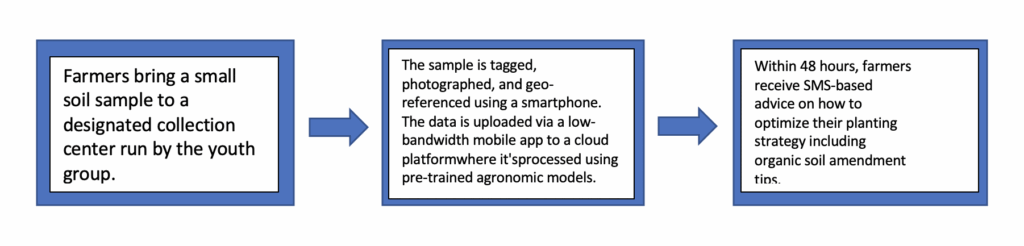
So far, over 500 farmers in Bugesera have accessed this service, and early feedback shows a 20–30% improvement in yield consistency among those applying the recommendations. The service is free and sustained through voluntary time, donations from local cooperatives, and occasional support from agricultural extension officers.
Youth leader Uwera Clarisse, 24, sees this as a new face of philanthropy: “We’re not building apps to get rich, we’re building them because our families can’t afford to fail anymore.”
Giving Without Glamour: Quiet Systems with Loud Results
Bugesera’s informal giving systems may not be branded or bankrolled, but they function with precision and purpose. These systems redistribute resources not just food or money, but knowledge, labor, and time, where they are most needed.
Last season, the Twisungane Cooperative recorded 46 mutual aid interventions: from shared farm tools to youth helping elders weed their fields. No receipts, no fundraising, just human commitment. This is philanthropy as practice, not performance.
Karasira Jean-Paul, the cooperative chairperson, sums it up: “Our help isn’t about sympathy. It’s about survival. And survival is a collective effort.”
A New Metric of Wealth
The Bugesera story invites us to reimagine what African philanthropy looks like, not through imported models, but through indigenous structures that have always existed. It challenges the idea that giving must be formalized or large-scale to be legitimate. What matters most here is the impact: restored dignity, improved harvests, educated children, and a strengthened social fabric, all powered by shared responsibility.
Bugesera’s model of collective resilience is not just a local phenomenon. It is a scalable blueprint for community-led change. As part of the Giving for Change movement, these systems deserve recognition and support, not to replace grassroots giving, but to amplify it. When the village gives back, it does more than meet needs; it plants futures; It nurtures systems; it redefines what it means to give.
About the Author
Mushabe Bobwilkens is a social impact storyteller and development practitioner based in Rwanda, dedicated to transforming rural livelihoods through inclusive and locally-led solutions. He leads Agri Export Exchange, a national nonprofit organization working to empower women, youth, and elderly smallholder farmers in the horticulture and coffee value chains.
Mushabe’s work champions community-owned development, fusing climate-smart agriculture, mental health integration, and circular economy models to strengthen farmer resilience, dignity, and export readiness. A strong believer in indigenous knowledge systems and collective giving, He documents and amplifies grassroots stories that reflect Africa’s evolving spirit of homegrown philanthropy, social justice, and intergenerational solidarity.